Digital traffic: smart parking in a post-pandemic world
Emma Mahy, the CEO and co-founder of IoT Solutions Group, discusses how smart parking technology is helping drivers, benefiting local authorities and improving the environment.
The post-pandemic predominance of personal vehicles
This summer has been marked by the glimmering hope of a return to some semblance of pre-pandemic normality. While the much-anticipated ‘Freedom Day’ had been pushed back a little, a return to normal habits was already anticipated in the world of driving. According to a recent survey by the Campaign for Better Transport, the majority of UK adults expect to travel as they did before the pandemic. This means that private cars will remain the vehicle of choice for shopping, leisure, and personal matters, favoured by 50%, 54%, and 52% of respondents respectively.
In fact, it may be an understatement to assume that personal cars will merely return to pre-pandemic usage. The latest RAC Report on Motoring found that the pandemic has actually set back attitudes towards public transport by decades: the RAC’s research indicates that almost 60% of car owners consider their vehicle essential, and reluctance to use public transport – presumably in response to COVID-related safety concerns – is at an 18-year high.

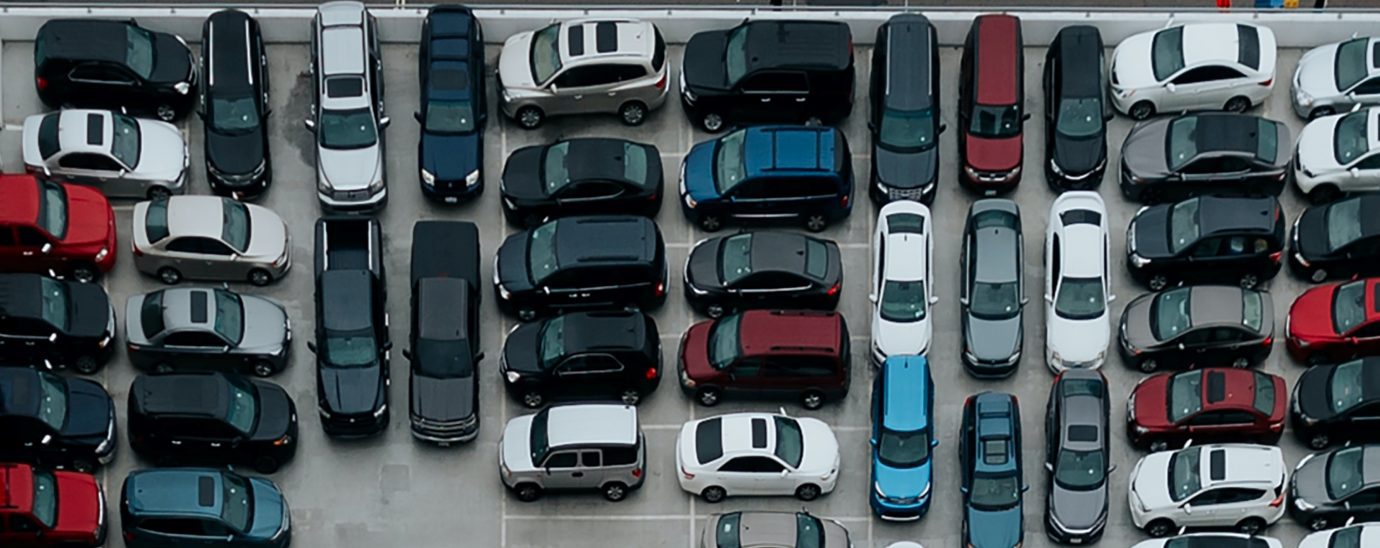
With driving set to be a more popular means of getting around than ever, especially in relation to shopping and leisure, it’s worth reflecting on the impact this has on parking in cities. In 2020, vehicle hiring firm All Car Leasing used data from the Department for Transport to demonstrate that many cities have a remarkable lack of parking spaces – London, for example, has 24.7 cars for every available parking space, while in Birmingham there are a staggering 51.5 cars for every space. If cars are here to stay, it’s worth exploring the growing technologies that will be increasingly necessary to address these issues as social restrictions continue to ease.
When in Rome…
In May 2021, an AI-enhanced smart parking technology by Sony was trialled in Rome. The trial, which used sensors to monitor parking spaces, was designed to extract metadata – in real-time – pertaining to available parking spaces. This exciting step forward in smart parking was marked by Sony’s MD of Corporate Alliance, Antonio Avitabile, who noted that smart parking solutions can achieve “more sustainable and liveable cities.” Clearly, technology like this is the future for smart parking in cities facing more drivers than ever before, but what are its benefits?
For one thing, residents of crowded urban areas will find this sensor technology allows them to keep their fingers on the pulse of a living, breathing flow of vehicles, alerting them to suitable spaces as soon as they become available. This also applies to the aforementioned shoppers and similar city visitors: by providing them with app-based parking information informed by smart parking technology, parking will become increasingly frictionless.
Beyond the confines of individual convenience, smart parking will likely have a substantial impact on parking management processes for local authorities. Proximity sensors are able not only to determine whether or not a vehicle is occupying a given space, but also whether or not that vehicle is authorised to be there. Enforcing rules of this sort will become a far smoother undertaking, as these insights are swiftly transformed into action, creating a positive impact on residents and disabled spaces.
Emissions, EVs, and the environment
Though these use cases suggest an enormous amount of convenience for individuals and a streamlined future for local authorities, another significant benefit and impact of smart parking in the coming years will be felt in its relationship to the environment. The above data regarding cars’ continued and growing popularity comes with the caveat of pollution and other environmental concerns. Rod Dennis, data insight spokesman for the RAC, said that reliance on personal vehicles is at odds with cities’ desires to “improve air quality and make urban centres cleaner.”
In this light, smart parking technology represents an important intervention: if the public can’t be persuaded to give up cars en masse, then why not reduce their emissions? Integrating parking information into apps will not only make it easier for drivers to park, but it will also ensure that drivers aren’t producing excess emissions through idling or hunting aimlessly for that vital free spot.
Alternatively, smart parking measures can facilitate greener alternatives without asking anybody to sacrifice their car through integration with electric vehicle (EV) charging bays. By enabling drivers to easily find available EV stations, smart parking technologies can play a vital role in ushering in environmentally friendly vehicles and alleviate issues such as range anxiety which currently present a barrier to the adoption of EVs on a wide scale.
READ MORE:
- Schneider Electric recognised as 2021 Microsoft Sustainability Changemaker Partner
- Meeting electric vehicle targets through data collection and analysis
- A green recovery powered by digital and electric: the fastest way to save the planet
- What makes a Tesla? Electric dreams and rare minerals
With its dual capacity for addressing more drivers in a post-pandemic world and mitigating elements of their environmental impact, the future of smart parking is entwined with the future of the planet itself.
For more news from Top Business Tech, don’t forget to subscribe to our daily bulletin!
Follow us on LinkedIn and Twitter

